In those moments when life feels tough, self compassion is simply treating yourself as you would a dear friend—with warmth, patience and understanding. It’s about recognising your struggles without the harsh inner critic kicking in. Over time, that gentle approach becomes a reliable source of resilience.
Understanding Self Compassion Foundations

Self compassion rests on three interlocking pillars, which we’ll unpack shortly:
- Self-Kindness rather than judgement, offering an encouraging inner voice.
- Common Humanity instead of isolation, acknowledging that everyone faces hardship.
- Mindful Awareness rather than over-identification, noticing thoughts without getting swept away.
- This guide builds understanding in clear stages—from core ideas to hands-on exercises and curated resources.
Next, we’ll look at how self compassion differs from both self-esteem and self-pity, and why it holds steadier ground when life shifts beneath our feet.
Core Components Overview
Self compassion combines kindness, shared humanity, and mindful presence.
Many people mistake self compassion for indulgence or weakness. In our myth-busting chapter, we’ll set those misunderstandings straight.
Evidence from UK research underscores self compassion’s power: it cuts burnout, eases stress hormones, and fosters healthier routines.
Preview Of Key Topics
- Debunking Myths: why self compassion isn’t a licence to avoid effort.
- UK Studies: how compassion practices boost resilience and calm stress.
- Daily Micro-Practices: simple Compassion-Focused Therapy (CFT) tools you can use anytime.
- Professional Milestones: knowing when to reach out for therapy or coaching.
Along the way, real-life stories and vivid analogies will bring each concept to life, making complex psychology feel down-to-earth.
By the end, you’ll have a step-by-step plan to embed self compassion into your day.
How The Framework Works
We’ve organised this guide into five progressive stages:
- Core Components and Definitions
- Comparison With Self-Esteem and Self-Pity
- Evidence-Based Benefits
- Practical Exercises From CFT
- Professional Support Guidelines
Each chapter pairs concise explanations with blockquotes for key insights and quick practice prompts to test your learning.
Next In This Guide
You’ll dive into the science behind psychological and physiological benefits, clear up common misconceptions, and learn hands-on CFT exercises designed to deepen your self-compassion.
Seek Support If Needed
We’ll also cover when specialist support makes sense, pointing you to UK-specific options like NHS Talking Therapies and accredited CFT practitioners.
Self compassion empowers you to face challenges with kindness and practical tools.
What You Gain
By following this roadmap, you’ll:
- Understand self compassion’s unique strengths.
- See how it differs from self-esteem and self-pity.
- Access research-backed insights from the UK.
- Practice simple exercises that fit into any schedule.
Armed with this foundation, you’re ready to explore each core component in depth. Next up: contrasting self-esteem with self-pity—and discovering why compassion endures where both can falter.
Understanding Self Compassion Core Components
Self compassion stands on three interlocking pillars that bolster our emotional resilience. Together, these elements help soften the inner critic and offer tangible ways to care for ourselves in everyday moments.
- Self-kindness is like speaking to yourself as you would to a close friend.
- Common humanity reminds you that everyone falters along the way.
- Mindful awareness lets you watch painful thoughts drift by, much like clouds in the sky.
Self Kindness Explained
Self-kindness invites a gentler inner voice when things go off-track. Picture consoling a friend who’s made a slip-up, rather than spoon-feeding yourself harsh criticism.
“When you treat yourself kindly, your brain shifts from threat mode to soothing mode.”
| Component | Analogy |
|---|---|
| Self-kindness | A trusted friend’s advice |
| Common humanity | A shared journey |
| Mindful awareness | Clouds drifting across the sky |
This practice actually rewires your brain by engaging the parasympathetic system. In a high-pressure meeting, pausing to offer yourself compassion can calm your nerves and sharpen your focus.
- Place a hand on your heart and whisper, “I’m doing my best.”
- Write a brief note of support and read it aloud each morning.
Applying Self Kindness Daily
Start each day by asking, “How would I respond if this worry came from a friend?” Within weeks, you’ll notice compassion replacing your usual self-critique.
Common Humanity In Practice
Common humanity pushes back against isolation when life gets overwhelming. It’s the reminder that every one of us has stumbled, felt fear or questioned our worth.
- A colleague misses a deadline—everyone has off days.
- A parent loses patience—countless others have been there too.
Sharing stories builds connection and makes us feel understood.
Connecting Through Shared Stories
When peers open up about similar struggles—online forums or coffee chats—the sense of aloneness gives way to belonging. That shift from isolation to connection is the heart of this pillar.
Mindful Awareness Tips
Mindful awareness means noticing thoughts and emotions without getting swept away. Think of it as watching clouds drift past a clear sky: they’re there, but you don’t chase them.
During the UK’s first COVID-19 lockdown in 2020, higher self compassion significantly predicted greater use of approach coping strategies among psychology and counselling practitioners, highlighting its vital role in effective coping under crisis conditions. Read the full research on approach coping strategies.
Mindful observation anchors us, preventing emotional flooding and rumination.
Keep yourself present with simple steps:
- Pause for a few breaths and note what you feel.
- Label each emotion in writing—‘sad’, ‘frustrated’, ‘calm’.
Short Mindfulness Practice
Find a quiet spot. Close your eyes and inhale for four counts.
Exhale on eight counts, imagining tension flowing out with each breath.
Bringing Components Together
When self-kindness, common humanity and mindful awareness align, they form a sturdy triangle of support. Suppose you scratch your car bumper on a busy morning:
- You stay calm and approach the repair with curiosity.
- You sidestep harsh self-criticism that drains your energy.
This blend of skills primes you for the deeper work ahead. Whether you’re facing a tough performance review or a personal setback, these core components equip you to respond with both strength and compassion.
Mastering these foundations sets the stage for exploring benefits, debunking myths and trying out practical exercises. Next, we’ll compare self-compassion with self-esteem and self-pity to uncover why these pillars truly sustain you when external validation fades.
Comparing Self Compassion To Self-Esteem And Self-Pity
Imagine self-esteem as a glass ornament: it gleams under praise but shatters at the first knock. In contrast, self-compassion acts like a soft cushion, absorbing shocks and warming you from the inside out.
Below you’ll find a clear side-by-side look at how self compassion, self-esteem and self pity each respond to life’s ups and downs.
Comparison of Self Compassion Self-Esteem and Self-Pity
Here’s a quick table to capture the essence of these three attitudes:
| Attribute | Self Compassion | Self-Esteem | Self-Pity |
|---|---|---|---|
| Core Focus | Kindness and understanding | Validation and achievement | Feeling sorry for oneself |
| Common Triggers | Mistakes and suffering | Praise or criticism | Loss and frustration |
| Long-Term Impact | Stable acceptance and growth | Fluctuating confidence | Persistent helplessness |
Studying this comparison highlights why self compassion remains steady, even when praise dries up or setbacks hit hard.
Key Differences In Daily Reactions
Self-esteem often feels like a rollercoaster—soaring with success then plunging after criticism. Self-pity, by contrast, encourages a loop of rumination, trapping you in frustration instead of action.
Here is a screenshot from Wikipedia illustrating core definitions of self compassion as recognised in academic circles.
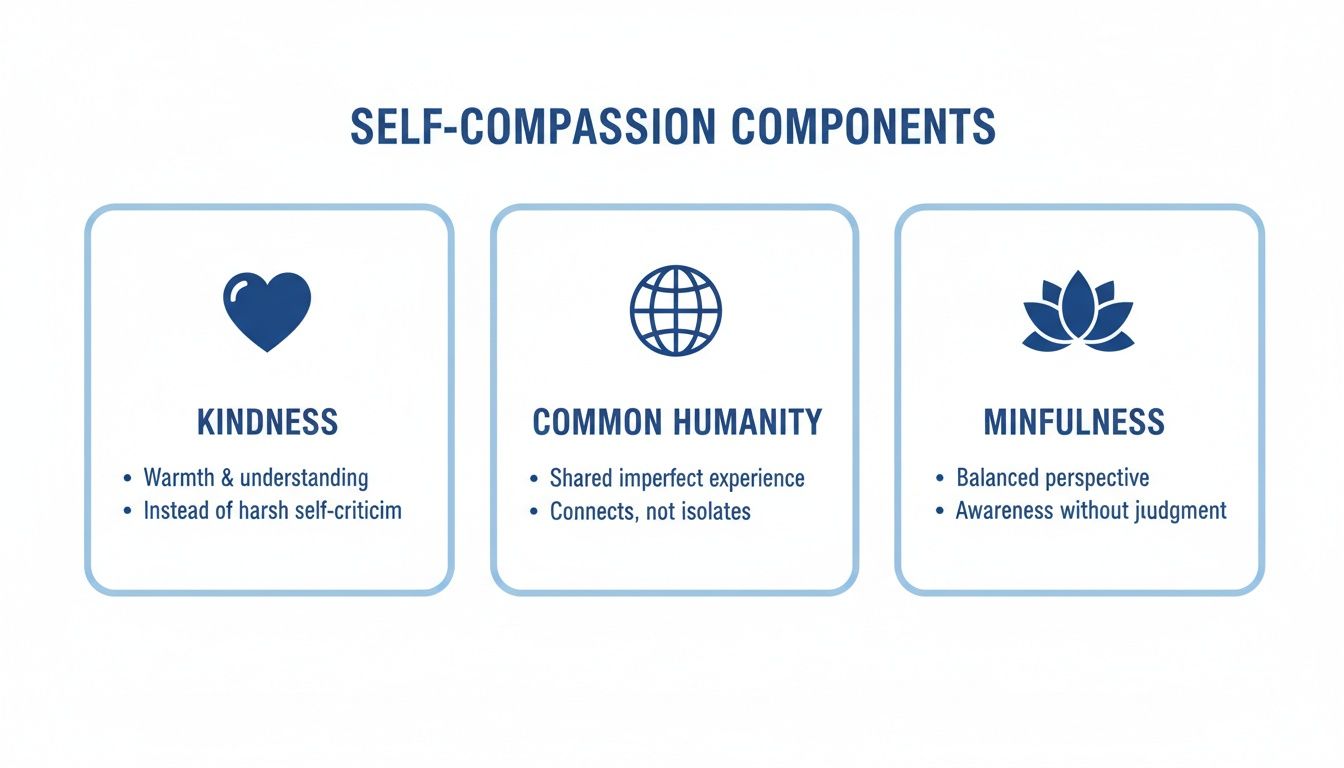
That snapshot reminds us how kindness and mindfulness anchor self-compassion, rather than chasing outside approval.
- When you miss a deadline, self compassion offers a gentle word then helps you plan a fresh start.
- After critical feedback, it notices the sting without replaying blame.
- By contrast, self-esteem might skyrocket with a pat on the back—or collapse at the slightest critique.
Real World Anecdotes
Take Sarah, for instance. She realised she’d misjudged her project timeline. Instead of tearing herself down, she acknowledged the slip-up and mapped out clear next steps without self-judgement.
John’s story differs. After his report drew criticism, his self-esteem plummeted—he questioned every skill he possessed. Had he fallen into self-pity, he’d have replayed that shame endlessly, never moving forward.
Benefits Of Steadier Inner Support
Unlike self-esteem, which leans on external applause, self compassion builds a dependable inner ally. Self-pity, meanwhile, magnifies helplessness and stalls action by zeroing in on blame.
Self compassion outperforms self-esteem and self-pity when you need consistent inner support.
For tips on navigating shame and self-criticism through compassionate practice, see our guide on shame and self criticism.
How To Cultivate Self Compassion
- Pause and take three deep breaths before responding to self-criticism.
- Acknowledge that errors are human—not a verdict on your worth.
- Notice and name your feelings without getting lost in them.
- Choose one constructive action to learn from the experience.
Common Confusions
- Self-compassion Is Not Self-Indulgence: It actually inspires growth, not avoidance.
- Self-Compassion Vs. Self-Pity: The former invites curiosity; the latter breeds stagnation.
- Regular practice (even just a minute a day) can shift your inner dialogue for good.
Adopting self compassion every day nurtures a balanced mindset that carries you forward, whether you’re riding high or navigating setbacks.
Benefits Of Practising Self Compassion

When life throws curveballs, treating yourself with a dash of compassion changes how you handle stress.
A kinder inner voice becomes the backbone of daily resilience.
Across the UK, researchers are uncovering how this gentle approach brings both mental calm and physical perks.
Physical Health Improvements
Practising self-compassion helps dial down the stress hormone cortisol.
That drop sets off a domino effect: a stronger immune response and less inflammation.
After just a few weeks of daily self-kindness rituals, many people report fewer aches and deeper, more restorative sleep.
- Boosted immune resilience through calmer stress responses and controlled inflammation
- Improved sleep quality as self-kindness replaces late-night rumination
- Increased health-promoting behaviours such as balanced eating and regular check-ups
A longitudinal UK study found that higher self-compassion boosts barrier self-efficacy and increases physical activity engagement, suggesting its practical value for sustaining healthy routines. Read the full research about self compassion and physical activity.
Emotional calm and better sleep often follow just a few weeks of self compassion exercises.
Emotional Resilience And Burnout Prevention
Self-compassion acts like a safety net, catching us when self-criticism threatens to pull us under.
In demanding roles, that protective mindset can be the difference between a productive day and full-blown burnout.
Leaders who reframe setbacks as learning moments consistently report steadier energy levels.
- Recognise stress signals early and talk to yourself in a soothing, supportive tone
- Swap perfectionist expectations for realistic, encouraging reminders
- Pause for three deep breaths whenever tension rises
For instance, one engineer bounced back to coding with renewed focus after framing a bug as a growth opportunity.
Enhanced Motivation And Focus
A gentle inner coach outperforms harsh criticism when long-term projects hit a lull.
Rather than spiralling into doubt, self-compassion fans the embers of determination without the burn of guilt.
Students who lean on kindly self-talk show 30% higher persistence in tackling tough tasks.
- Celebrate tiny victories rather than chasing an impossible ideal
- Take brief compassion breaks—just a minute of mindful kindness to reset focus
- Visualise supportive phrases as tools that reinforce your inner resolve
When motivation dips, treating yourself with understanding makes returning to exercise after setbacks feel less daunting. Public health programmes now weave self-compassion practices into their plans, and organisations note 20% lower dropout rates in wellness schemes that include compassion training.
“Self compassion isn’t indulgence—it’s the engine that drives steady progress.” — Dr Chris Irons
Whether you’re racing against deadlines or reviving a New Year’s resolution, a kinder inner voice keeps you on track.
Community Wellbeing Impact
The ripple effect of self-compassion reaches far beyond the individual.
When communities embrace kindness training, collective stress levels begin to ebb.
- School programmes that teach children compassionate self-talk foster a more positive classroom atmosphere
- Workplace wellness workshops on self-compassion help cut team burnout
- Local health campaigns featuring compassion challenges encourage healthier routines
A UK mental health trust reported a 15% drop in patient GP visits after rolling out compassion-based interventions.
These examples highlight how self-compassion nurtures supportive networks that strengthen healthy choices.
Public programmes that integrate self compassion see measurable mood improvements within months.
Practical Takeaways For Application
Begin each morning by jotting down a simple, encouraging phrase in a journal or note app.
When stress surfaces, pause and take three kind, measured breaths.
- Label your feelings neutrally before adding a note of self-kindness
- Set reminders to take micro-compassion breaks throughout your day
Track both your successes and stumbles to witness your progress over time.
Integrate these small actions daily to anchor the benefits long-term.
Embracing self compassion transforms challenges into stepping stones for well-being.
Start your self compassion journey today and notice profound changes in mind and body.
These evidence-backed benefits make self compassion a key tool in lasting health.
Explore our next chapters for exercises and professional support options to deepen your practice.
Enjoy growth.
Practical Self Compassion Exercises

Infusing self-compassion into your day builds real emotional resilience. You don’t need a big time slot—just a spare minute and a few simple CFT practices.
These bite-sized exercises help you weave kindness into busy, high-pressure moments without adding to your to-do list.
- Compassionate Breathing for grounding with ocean wave imagery
- Soothing Rhythm Breathing to calm the nervous system
- Self-Compassionate Letter Writing as a supportive conversation
- Three-Minute Kindness Breaks for quick emotional resets
Guided Compassionate Breathing
This technique invites your breath to mimic gentle ocean waves. Picture each inhale as a cool tide rolling in, soothing body and mind.
Choose a short audio guide or silent focus—both work, even in a crowded space.
- Find a quiet spot and settle in.
- Close your eyes and feel a soft sea breeze.
- Inhale slowly for four counts, imagining cool water flowing through you.
- Exhale for six counts, letting tension drift away like receding waves.
“Imagine each inhalation as a gentle sea breeze that calms your mind and soul.”
Use this as an anchor before a tough meeting or a difficult conversation.
Soothing Rhythm Breathing
A steady breathing pattern taps into your parasympathetic system, calming stress fast. The simple cycle of inhale, hold, exhale can bring immediate relief.
- Inhale for four counts through the nose.
- Hold for two counts, noticing calm build inside.
- Exhale gently through pursed lips for six counts, releasing tightness.
Repeat until you feel grounded and more centred.
Self Compassionate Letter Writing
Putting pen to paper creates a private, supportive dialogue. Think of the page as a caring friend offering warmth.
- Prompt 1: Recall a recent mistake and name your feelings.
- Prompt 2: Write as if comforting someone you love, choosing kind, patient words.
- Prompt 3: Offer the advice you’d give to a close friend.
A sample opening might read:
“Dear Me, I see you’re struggling right now, and I’m here to offer compassion and understanding.”
This exercise can be done in ten minutes or less.
Three Minute Kindness Breaks
A brief pause can reset your mind in just three minutes. The phases below break it down:
| Step | Duration | Imagery |
|---|---|---|
| Notice Inner Critic | 30 seconds | Cloud drifting |
| Offer Kind Phrase | 60 seconds | Soft heartbeat |
| Breath Reset | 90 seconds | Ocean wave |
- Set a quick reminder on your phone.
- Pair the break with your tea or coffee ritual.
- Start with a single breath if self-doubt creeps in.
Tackling barriers like time pressure and inner critique helps make this a lasting routine.
For structured guidance and deeper practice, try our online self compassion course at https://drchrisirons.com/online-self-compassion-course/.
Sample Audio Scripts
Recording a voice note anchors your practice wherever you are. Play it back whenever you need a reset.
Here’s a concise script you might record:
Welcome. Breathe in like an ocean wave.
Hold the breath for two counts.
Breathe out, releasing all tension.
Repeat for three minutes.
Tips For Busy Schedules
Slotting self-compassion into a hectic day takes creativity. Look for small pockets of time rather than waiting for big blocks.
- Attach a two-minute breath practice to your morning cup of tea.
- Journal during a commute pause or while waiting in line.
- Use calendar reminders labelled “Kindness Check-In”.
Overcoming Inner Resistance
Your mind may object to pausing for yourself—that’s normal. Noticing this resistance is part of the journey.
- Acknowledge your self-critical voice and thank it for caring.
- Promise yourself a small reward after each session.
- Partner with a friend to share progress and stay accountable.
With gentle consistency, you’ll learn to move past these hurdles and build a reliable habit.
Balancing Tender And Fierce Compassion
Merging soft acceptance with firm protection creates a balanced compassionate stance. Think of it as yin and yang energies working in harmony.
- Inhale for three counts, imagining fierce energy shielding your heart.
- Hold for two counts, sensing protective strength.
- Exhale for four counts, inviting tender warmth into your chest.
Use this one-minute cycle when you need both empathy and assertiveness for boundary challenges.
Tracking Your Progress
Logging your practice shines a light on patterns and sustains motivation.
- Note the exercise type and duration each day.
- Record mood shifts before and after sessions.
- Use a simple habit tracker to chart your growth.
Review your log weekly to spot progress and fine-tune your routine.
These tools help you nurture self-compassion, one small step at a time.
When to Seek Professional Support
Sometimes our own efforts at kindness simply aren’t enough. You might notice that self-criticism has settled in like an unwelcome guest—persistent, nagging and hard to shake.
When emotions feel overwhelming or old wounds keep cropping up, a coach or therapist can help you break through the plateau and cultivate deeper self-compassion.
- Persistent self-criticism that undermines your daily routine
- Chronic anxiety or depression unrelieved by self-guided practices
- Recurrent traumatic memories that prompt intense reactions
- Self-doubt or perfectionism stalling your progress and amplifying distress
- Isolation despite doing self-compassion exercises, leaving you stuck
Recognising When Self Help Isn’t Enough
Self-help exercises are often a solid first step, but they can hit a ceiling. Without a structured framework, it’s easy to circle the same insights without moving forward.
Compassion Focused Therapy (CFT) practitioners introduce specific tools—compassion flows, soothing rhythm breathing and guided imagery—that propel you past those roadblocks.
A UK study of 182 nursing students found that resilience and mental well-being together account for 52% of the variance in self compassion, emphasising when targeted interventions may be needed. Read more about these findings in this study
“Sometimes outside guidance illuminates blind spots that self-reflection misses.”
What To Expect In Sessions
Therapy or coaching begins with building rapport and setting clear, compassionate goals. You’ll quickly notice a shift from self-judgement to curiosity.
- Goal setting alongside your personal values
- Guided compassion flows to soften harsh self-talk
- Imagery work designed to foster safety and warmth
- Progress tracking through reflective exercises
UK Resources For Support
Whether you choose NHS services or private coaching, there’s plenty of help on offer.
- NHS Talking Therapies programme: free self-compassion modules and low-intensity CFT interventions
- British Association for Behavioural and Cognitive Psychotherapies: search for accredited CFT practitioners
- Compassionate Mentors UK: peer-led support for daily compassion practices
- Self-Compassion Network (online forums): share tips and stories in a global community
- Local counselling centres: many now integrate CFT principles into standard therapy
Deciding between going it alone and seeking a professional depends on your current needs, your progress so far and what support feels right.
If self-help tips are giving you consistent relief, you might continue solo. But if you find yourself stuck or yearning for deeper change, a CFT expert can provide a clear, evidence-informed path.
Deciding Your Next Steps
Pause and consider your support preferences, schedule and the complexity of your challenges.
Use this simple checklist to guide your decision:
- Rate your current stress and self-criticism on a scale of one to ten
- Identify any plateaus or moments where self-guided methods feel insufficient
- Commit to a trial period (four to six sessions) with a practitioner and review your progress
Choosing professional support is a powerful statement of self-care. Whether through therapy, coaching or peer groups, each step nurtures a more compassionate you.
Seeking help always truly strengthens your ability to offer self compassion precisely when you need it most.
Frequently Asked Questions
You might be asking yourself how to weave self compassion into the rhythms of everyday life. A simple breathing exercise often does the trick—just a few mindful breaths can act like an anchor when stress starts to pull you under.
Start by noticing your inhale and exhale. Gently whisper to yourself, “May I be kind to myself,” and picture an encouraging inner companion cheering you on.
Common questions include:
- How do I practise self compassion effectively?
- What sets self compassion apart from self-esteem?
- Can self compassion really help with anxiety and stress?
- When is it time to seek professional support?
First, observe any self-critical thoughts without rushing to judge. Creating that little space opens up room for a kinder response.
Unlike self-esteem—which often hinges on comparison—self compassion is about offering care, come rain or shine. Your sense of acceptance doesn’t plunge every time things don’t go to plan.
Emotional And Physical Effects
Research shows that self compassion can lower cortisol levels and ease muscle tension. Fitting in short compassion breaks—even two or three breaths—can have a surprisingly measurable impact on stress.
Consider reaching out for therapy if those harsh inner voices stay loud or if old wounds keep resurfacing. Compassion Focused Therapy offers a host of practical tools to reshape how you respond to yourself.
“Self compassion grows strongest when practised regularly, even in small moments.”
To sidestep self-pity, remember that pain is part of the human story. Lean into that shared experience, then gently reframe your trigger points with curiosity and care.
Yes, it really can be that simple. Slot in a two-minute exercise—perhaps a quick mindful breath or a silent kindness pause—and build from there.
For deeper answers, explore our detailed FAQ guide on self compassion: Dive Into Our FAQs
Summary Of Key Answers
These FAQs tackle the stumbling blocks most of us face—like telling self compassion apart from self-esteem or spotting when to seek help.
Revisit them as your practice grows; each question answered is a small boost to your confidence.
“Confidence in practising self compassion grows with each answered doubt.”
Keep this list close at hand whenever you need a quick reminder to treat yourself with kindness. The journey truly does matter.
Deepen your self compassion journey? Explore support with Dr Chris Irons at Chris Irons’ website for guidance and coaching tailored to your needs. Start your compassionate practice today and watch the difference unfold over time.