A guided meditation for healing is simply a practice that uses a gentle, spoken voice to help you settle your mind and direct kind attention towards those parts of you that are hurting. Unlike trying to meditate in silence, which can sometimes feel a bit daunting, it offers a clear path, making it much easier to navigate difficult thoughts and cultivate a sense of inner safety. Many of these practices, including the one we'll explore here, are built on solid therapeutic principles to actively support emotional recovery.
The Power of Compassion in Guided Meditation

Have you ever tried traditional mindfulness and found it… well, really difficult? You’re not alone. For many people, especially those of us wrestling with a harsh inner critic, the instruction to simply "observe your thoughts" can feel like shining a spotlight on self-judgement.
When you're already in pain, sitting in silence can sometimes just amplify feelings of anxiety or shame. That’s the very last thing you need when you’re trying to heal.
This is exactly where a guided meditation for healing that is grounded in compassion can make all the difference. As a clinical psychologist who specialises in Compassion Focused Therapy (CFT), I’ve seen time and again how deliberately introducing warmth and kindness transforms the entire meditation experience. It changes the goal from just noticing your pain to actively soothing it.
A Gentler Way to Do the Inner Work
Instead of leaving you to face your thoughts alone, a compassion-focused meditation provides a supportive structure. Think of it as having a gentle guide walking beside you through tricky internal territory, offering reassurance and helping you build a kinder relationship with yourself.
This isn’t about pretending difficult feelings don't exist. It's about learning how to meet them with courage and warmth, rather than with fear or self-criticism.
This approach helps create a crucial feeling of safety inside. When your mind learns it can approach its own distress with care, your whole nervous system can begin to settle. This is absolutely essential for genuine emotional healing, because we simply can't heal when we're stuck in a state of self-attack or high alert.
Understanding the Three Flows of Compassion
At the heart of CFT and this guided practice are what we call the "three flows of compassion." These aren't just abstract concepts; they are active skills we can learn and strengthen. I like to think of them as three distinct muscles we're training during the meditation.
- Giving Compassion to Others: This is our ability to notice when others are struggling and feel moved to help. In our practice, we often activate this part of the brain by visualising a compassionate figure.
- Receiving Compassion from Others: This is about our capacity to let kindness and care in. For anyone with a history of trauma or self-criticism, this can be incredibly challenging, but it’s a vital part of the healing process.
- Self-Compassion: This is the skill of turning that same warmth and kindness inward, towards ourselves. It’s about learning to treat yourself with the same care you’d instinctively offer a good friend. You can learn more about how self-compassion is the key to emotional well-being and resilience in our detailed guide.
These three flows are all connected. By practising giving and receiving compassion, we start to build the neural pathways that make self-compassion feel more natural and accessible. The guided script we’re about to explore is specifically designed to activate and strengthen all three.
This isn't just about relaxation. It's an active, therapeutic process of rewiring your relationship with yourself. You are learning to become your own source of comfort, strength, and support.
This approach shifts meditation from a passive act of observation into an active tool for building resilience. By engaging with these compassionate flows, you’re not just calming your mind for a few minutes; you are fundamentally changing how you relate to your inner world. This creates lasting change that extends far beyond your practice time, helping you navigate life's challenges with much greater inner stability.
Why This Healing Meditation Approach Actually Works
To really get why a compassion-focused guided meditation for healing is so powerful, we need to pull back the curtain on what’s happening inside our own minds and bodies. It's not just about feeling a bit calmer for a few minutes; it’s a direct and intentional way of working with our deeply ingrained psychological systems.
At its core, this practice is designed to actively soothe your body's threat system. Think of this as your internal alarm bell, the part of you responsible for feelings like anxiety, fear, and that harsh inner critic. When this system is stuck in overdrive, we feel constantly on edge, as if danger is lurking just around the corner, even when we're perfectly safe.
The specific compassionate phrases and guided imagery in this practice aren’t just pleasant thoughts. They're targeted signals to your brain that you are safe, cared for, and not under attack—especially from yourself. This process helps dial down the fight-or-flight response that can keep us trapped in a relentless cycle of stress and emotional pain.
Activating Your Internal Soothing System
The real magic of this approach lies in the deliberate activation of your soothing system. This system, linked to feelings of contentment, safety, and connection, is physiologically designed to calm us. When it comes online, it releases hormones like oxytocin, which directly counteract the effects of stress hormones like cortisol.
Here’s a common problem: traditional meditation can sometimes leave people feeling even more frustrated, especially if their threat system is highly active. A compassion-focused approach, however, provides the specific "ingredients" the soothing system needs to engage. It gives your mind a gentle, kind focus—a much more effective strategy than simply trying to "clear your thoughts" when you feel distressed.
By consciously generating feelings of warmth and kindness, you are essentially telling your nervous system, "It's okay to stand down. We are safe now." This is a profound shift from struggling against difficult emotions to actively calming the system that produces them.
Over time, this builds a powerful foundation for emotional regulation. You’re not just coping; you're developing the capacity to genuinely soothe yourself when faced with life's inevitable challenges, rather than being knocked over by them.
Real-World Benefits and Proven Effectiveness
The ripple effects of this practice extend far beyond the meditation cushion, leading to tangible changes in your daily life.
- Quieting the Inner Critic: It helps you cultivate a kinder inner voice, turning down the volume on harsh self-judgement. This is a common struggle, and you can explore more on how Compassion Focused Therapy can help you heal from shame and self-criticism in our dedicated article.
- Managing Overwhelming Feelings: You learn to meet difficult emotions like sadness or anger with warmth, which makes them feel less threatening and far easier to process.
- Building Inner Strength: This practice cultivates a deep sense of inner security and resilience, creating a reliable source of comfort you can turn to anytime.
The evidence for guided mindfulness practices in mental health is getting stronger all the time. In a groundbreaking UK-based study funded by the National Institute for Health and Care Research, guided mindfulness self-help was found to be significantly more effective than standard guided Cognitive Behavioural Therapy self-help for treating mild to moderate depression. At 16 weeks post-intervention, the mindfulness group showed a 17.5% greater improvement in recovery.
Beyond these specific healing aspects, understanding the top health benefits of meditation more broadly can offer even more insight into why this approach works so well. This compassionate method is a powerful, science-backed tool for fundamentally changing your relationship with yourself and fostering lasting emotional well-being.
Right, let's get you ready for this practice.
Setting yourself up for a meaningful meditation isn't just about finding a quiet room. Think of it as an act of genuine self-care; you're creating the conditions for your nervous system to feel safe enough to actually settle down. This is a big deal, especially if the idea of sitting with your own thoughts makes you a bit anxious.
Forget any ideas about getting it "perfect". The only goal here is to create a space—both around you and inside you—that feels supportive. This simple act of preparation is a crucial part of your guided meditation for healing. It's a signal you send to your body and mind, letting them know it's okay to let go, just for a little while.
Create Your Safe Environment
Your physical surroundings really do matter. Find a spot where you feel reasonably comfortable and know you won’t be disturbed for the next few minutes. This doesn't have to be some silent, Instagram-worthy meditation shrine. It just needs to be your space for the practice.
A few small tweaks can make a world of difference in making the space feel calmer:
- Soften the lighting: Just dim the lights or pull the curtains a bit. A gentler atmosphere helps.
- Minimise distractions: Switch your phone to silent and, if you can, put it out of arm’s reach. If you live with others, let them know you need a bit of uninterrupted time.
- Add a touch of comfort: Do you have a favourite blanket or a comfy cushion? Small sensory comforts can have a surprisingly big impact on how safe and settled you feel.
The aim here is to dial down the external "threats" so your internal system has less to keep track of. This simple act of preparing your space sends a powerful message of safety to your brain before you even close your eyes.
Adopt a Compassionate Posture
The way you hold your body sends direct messages to your nervous system. An upright, rigid posture can signal tension and high alert, whereas a gentle, grounded posture signals safety and ease.
Honestly, there’s no single "right" way to sit. Whether you’re on a chair with your feet flat on the floor or cross-legged on a cushion, the focus is on finding a posture that feels both dignified and relaxed. Let your shoulders drop away from your ears. Rest your hands gently in your lap or on your knees.
A key principle in Compassion Focused Therapy is that our body posture can influence our emotional state. By adopting an open, stable, and gentle posture, we are physically embodying the compassionate mindset we wish to cultivate.
This physical grounding is a foundational step. Before you hit play on any audio, just take a moment. Feel the solid support of the chair or cushion beneath you. This simple act of noticing physical support is often the first step to calming an anxious mind.
Begin with Soothing Rhythm Breathing
Before we jump into the main script, let's use a simple yet powerful CFT technique called soothing rhythm breathing to get ourselves anchored. This practice is designed to directly engage your body’s soothing system, helping you feel calmer and more centred.
- First, find a gentle, slow rhythm for your breath. It often works well to breathe in through your nose and out through your mouth or nose—whichever feels most natural for you.
- Imagine your breath flowing smoothly, with no force or strain. The goal isn't to take a massive breath, but to find a deep, slow, and calming rhythm that works for you.
- As you breathe, see if you can bring a gentle, kind intention to it. You might silently say to yourself, "Breathing in calm, breathing out tension."
Just do this for a minute or two. For anyone interested in exploring more techniques like this, there are many excellent CFT resources available that offer deeper guidance. This initial breathing exercise prepares both your mind and body for the healing work to come.
Here we go. This is the heart of the practice: a complete, 25-minute guided meditation script designed to gently guide you towards emotional healing.
This script is rooted in the principles of Compassion Focused Therapy (CFT). It’s structured to help you build a kinder, more supportive relationship with yourself, especially when things get tough.
It’s broken down into simple, easy-to-follow stages. You'll find specific phrasing and detailed instructions for visualisations, like creating a personal compassionate image and using a compassionate colour to soothe difficult feelings. My hope is that you can read this aloud, or even record it for yourself, so it feels like a therapist is right there with you, guiding you through each step.
Before we dive in, let’s quickly look at setting the stage for your practice. This isn’t about achieving perfect stillness, but simply creating the right conditions for your nervous system to feel safe enough to settle.
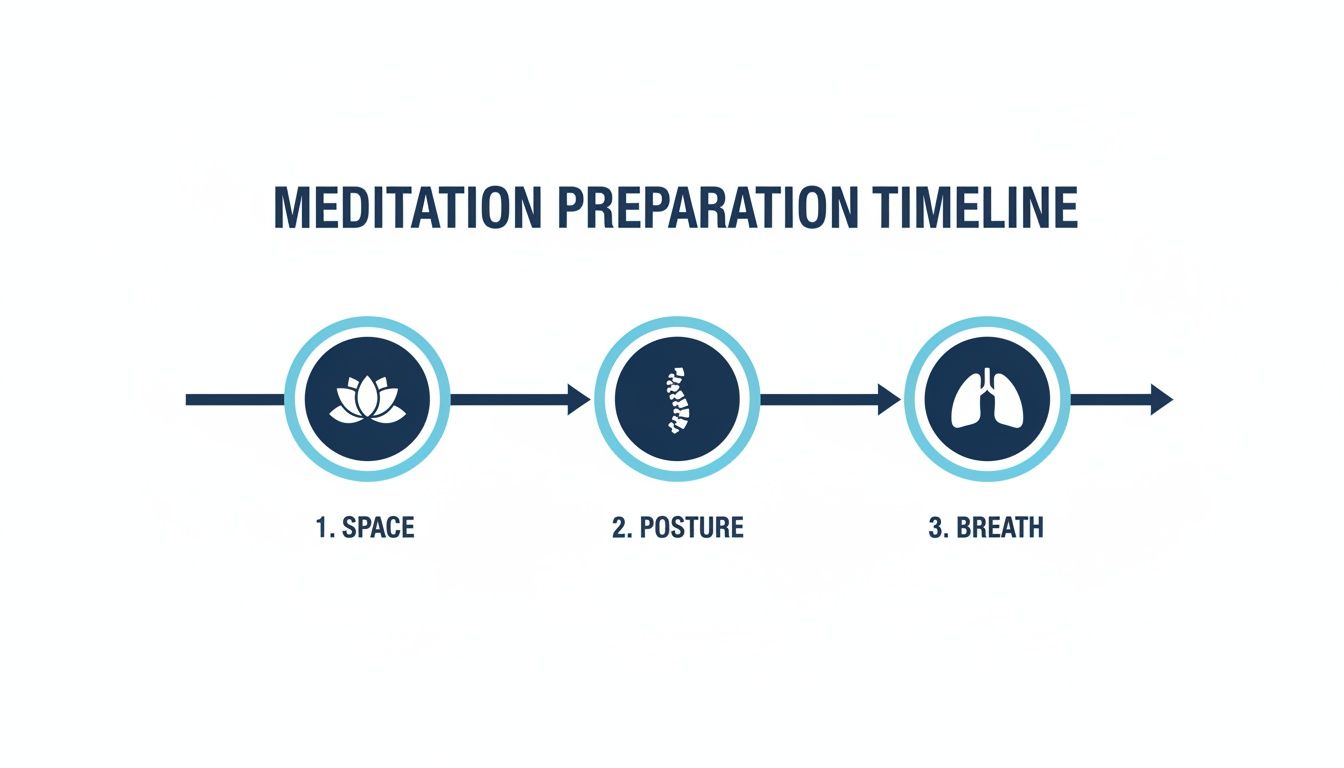
As you can see, a little attention to your space, posture, and breath goes a long way. It’s a signal to your body and mind that it's okay to let go and turn inward.
To give you a clearer picture of how the next 25 minutes will unfold, I’ve put together a simple table outlining the structure. Think of it as a roadmap for your healing journey.
Structure of Your 25-Minute Healing Meditation
This breakdown of each phase in the guided meditation script outlines its purpose, key techniques, and timing to help you understand the flow of the practice.
| Phase | Approximate Time | Purpose and Core Technique |
|---|---|---|
| Soothing Rhythm Breathing | 5 minutes | To activate the parasympathetic nervous system and create a sense of safety and calm. The core technique is slowing the breath to a gentle, comfortable rhythm. |
| Creating a Compassionate Image | 7 minutes | To build an internal source of support by imagining an ideal compassionate figure. We use sensory details to make the image feel real and accessible. |
| Directing Compassion Inward | 8 minutes | To actively apply compassion to difficult emotions or physical sensations. This involves offering kind phrases and breathing with, not against, the discomfort. |
| Using Compassionate Colour | 5 minutes | To use gentle imagery to soothe and hold emotional pain. A healing colour flows through the body, offering warmth and kindness without trying to eliminate the feeling. |
This structure is designed to guide you progressively deeper, from general calming to a direct, supportive engagement with your inner world. Now, let’s begin.
Phase 1: Soothing Rhythm Breathing (First 5 Minutes)
(Voice Tone: Gentle, slow, and reassuring)
“Begin by finding a comfortable and dignified posture… feeling the solid support of the surface beneath you… just allowing your body to settle. Let your eyes gently close, or if you prefer, lower your gaze to a soft focus on the floor in front of you.”
“Now, simply bring your awareness to your breath. There’s no need to change it at all… just notice the natural rise and fall of your chest or belly. We’re going to find a soothing rhythm. Breathing in slowly… and breathing out slowly… finding a pace that feels deeply calming for you.”
“As you breathe in, imagine you are drawing in a sense of calm and peace. And as you breathe out, imagine you are gently letting go of any tension you might be holding. In… and out. Slow, smooth, and gentle. Let's just stay with this for another minute or so, allowing your body to settle into this soothing rhythm.”
Phase 2: Creating Your Compassionate Image (Next 7 Minutes)
(Voice Tone: Warm, imaginative, and encouraging)
“Now, I’d like you to bring to mind an image of what deep compassion might look like for you. This isn’t about getting it ‘right’ or forcing anything, just seeing what emerges. This compassionate image is something you can turn to for support and kindness, anytime you need.”
“What qualities would your ideal compassionate image have? Perhaps it holds great wisdom, knowing the full story of your life and struggles without a hint of judgement. Perhaps it embodies great strength, offering you courage and protection. And perhaps it radiates an immense warmth and a deep, unwavering commitment to your well-being.”
“Let’s bring this image to life with our senses. What does it look like? Is it a person, an animal, a natural scene like an ancient tree, or maybe just a warm, comforting light? There’s no right or wrong answer here. Just go with what feels supportive to you.”
“What does your compassionate image sound like? Maybe its voice is calm and reassuring. What does it feel like to be in its presence? Safe? Understood? Cared for? Spend a few moments just getting a sense of this compassionate presence you've created.”
Remember, this compassionate image is a part of you. It represents your own innate capacity for wisdom, strength, and warmth. You are simply learning how to access it more readily.
“Imagine your compassionate self is right here with you now, looking at you with eyes of complete kindness and understanding. It knows everything you’ve been through and accepts you just as you are, in this very moment.”
Phase 3: Directing Compassion Inward (Next 8 Minutes)
(Voice Tone: Kind, direct, and heartfelt)
“Keeping this compassionate image in mind, let’s now turn this warmth towards yourself. Imagine your compassionate self is offering you some kind words. What is it you most need to hear right now?”
“Perhaps it’s something simple like… ‘May you be free from your suffering.’ … ‘May you feel safe and at peace.’ … or ‘May you be kind to yourself in this moment of difficulty.’ Just listen for the words that feel right for you, and allow yourself to truly receive them.”
“Now, gently bring your attention to a part of your body where you might be feeling some emotional pain or discomfort. It could be a tightness in your chest, a knot in your stomach, or a feeling of heaviness. Be gentle with your attention.”
“Imagine you can breathe that soothing, rhythmic breath directly into this area. Breathing in warmth and kindness… and as you breathe out, just allowing the feeling to be there, without needing to fix it or push it away.”
For more practices focused on easing tension, this is a great resource: Guided Meditation To Melt Away Stress And Promote Inner Peace.
Phase 4: Using Compassionate Colour (Last 5 Minutes)
(Voice Tone: Soothing, creative, and gentle)
“Now, let’s bring in a compassionate colour. Think of a colour that represents warmth, kindness, and healing to you. It could be a soft gold, a gentle green, or a warm blue. Whatever colour feels right, imagine it now.”
“Imagine this beautiful, healing colour is gently flowing into the very top of your head… and slowly, softly, it spreads down through your entire body. Filling your head… your neck… your shoulders, releasing any tension it finds there.”
“Let this compassionate colour flow down into your chest and your heart centre… imagine it surrounding that area of difficulty with its gentle, healing light. Not to get rid of the feeling, but simply to hold it with kindness.”
“Allow this warm, healing colour to continue its journey down… through your stomach… your hips… down through your legs… all the way to the very tips of your toes. Your whole body is now filled with this gentle, compassionate light.”
“Just rest here for a few moments, breathing in this colour of kindness, allowing yourself to be held and soothed by it.”
“And now, when you’re ready, gently bring your awareness back to the feeling of the surface beneath you. Begin to notice the sounds in the room around you. And very slowly, when it feels right, you can begin to open your eyes, bringing this practice to a gentle close. Take a moment to thank yourself for showing up for this practice of healing today.”
Weaving Compassion into Your Everyday Life

While a dedicated meditation can feel like a huge relief, the real magic of healing happens when compassion isn’t just an event, but a constant thread you weave throughout your day. It’s not about one grand gesture of self-care. It’s about the small, consistent acts of kindness you show yourself that truly create lasting change.
The goal is to take what you learn in this guided meditation for healing and bring it off the cushion and into your life. It’s about shifting from an occasional practice to an ongoing, supportive inner dialogue, especially when things get tough. Let's look at how to make this feel natural and achievable, not like another chore on your to-do list.
Creating a Practice Schedule That's Actually Realistic
So often, we get stuck on the idea that we need a full hour of silent meditation every single day. This "all-or-nothing" mindset is a classic trap that usually leads to, well, nothing. The kindest thing you can do for yourself is to start small.
And I mean really small.
Committing to just 10 minutes, maybe three times a week, is a brilliant way to begin. That consistency is far more potent than one heroic, hour-long session once a month. It’s about training your brain to regularly access its soothing system, making it a familiar and reliable resource.
Here are a few tips to get it to stick:
- Piggyback on a habit. Try your 10-minute meditation right after your morning coffee or just before you brush your teeth at night. Linking it to something you already do automatically makes it so much easier.
- Book it in. Put it in your calendar like you would any other important meeting. This sends a powerful signal to your brain that this time for yourself is non-negotiable.
- Be kind if you miss a day. It will happen. The compassionate response isn't to beat yourself up; it's to simply begin again tomorrow, no drama needed.
This approach builds gentle momentum without the pressure, making you far more likely to keep going.
Using 'Compassionate Check-Ins' Throughout Your Day
You don't need a full 25-minute session to feel the benefits. In fact, some of the most powerful work happens in tiny moments scattered throughout your day. I call these 'compassionate check-ins', and they are game-changers for managing stress as it happens.
Picture this: a stressful email lands in your inbox, and you feel that familiar surge of anxiety. Instead of letting it spiral, you can take just 60 seconds to check in with yourself.
- Just pause and breathe. Three slow, deep, soothing breaths. That's it.
- Acknowledge what's here. Say to yourself, silently, "Okay, this is a moment of stress. I feel it." Naming it takes away some of its power.
- Offer a little kindness. Place a hand on your heart—the physical touch is surprisingly grounding—and offer a simple phrase like, "May I meet this with as much calm as I can."
This simple act can literally interrupt your body's threat response and nudge you back towards a more balanced state. It’s how you give yourself support right when you need it most, bringing the skills from your longer guided meditation into the messy reality of daily life.
Navigating Roadblocks with Self-Kindness
Let's be clear: your mind will wander. You will get frustrated or feel like you're "not doing it right." This is completely normal. In fact, it's the whole point.
When you notice your mind has drifted off, the practice isn't about yanking it back into place. It’s about gently and kindly guiding it back. Every single time you do this without judging yourself, you are actively building your compassionate self.
That shift in perspective is everything. The goal was never to have a perfectly empty mind; it's to cultivate a kind and forgiving one.
This approach is gaining huge traction. The UK's meditation management app market, filled with tools for stress and emotional healing, was valued at USD 62.0 million in 2023 and is projected to soar to USD 214.5 million by 2030. This isn't just a trend; it's a major cultural shift towards accessible mental wellbeing. You can read more about the growing UK meditation app market and its impact. Using these practices alongside therapy can be incredibly powerful, reinforcing the work you do in sessions and empowering you on your healing journey.
Got Questions About Healing Meditation?
Starting anything new, especially something as personal as a healing practice, always brings up a few questions. When you're dipping your toes into a guided meditation for healing, particularly one rooted in compassion, it's so easy to get caught up wondering if you're "doing it right." Let's walk through some of the most common worries I hear, and I’ll offer some practical, reassuring thoughts to help you feel more confident on this path.
Remember, the goal here isn't perfection; it's about being present and kind to yourself. Every single moment you show up, no matter how messy or distracted it feels, is a genuine step towards healing.
"What If I Can't Visualise Anything?"
This is probably the number one concern I come across. You hear the instruction to picture a "compassionate image," and your mind feels like a complete blank. First off, please know this is incredibly common and absolutely okay. Visualisation is just one tool in the toolbox; the real aim is to stir up a feeling of compassion.
If pictures aren't your thing, try leaning into another sense:
- Felt Sense: Can you just imagine the sensation of warmth or strength in the room with you? You don't need a clear image to feel a presence.
- Auditory Cues: What would a truly compassionate voice sound like? Could you imagine its tone—maybe it’s calm, steady, and kind?
- Simple Intention: Honestly, just setting the intention to connect with your compassionate self is powerful enough. The effort and the intention are what really matter here.
This practice is wonderfully flexible. It’s all about finding what works for your mind, not forcing yourself into a box. We're trying to cultivate a feeling, not produce a Hollywood-level mental movie.
"How Should I Handle Difficult Emotions That Come Up?"
It's a common myth that meditation is about emptying your mind or floating on a cloud of bliss. The reality is, when we finally get quiet, the difficult emotions we've been pushing down often take the opportunity to come to the surface. This isn't a sign that you're failing—it's a sign that you've created just enough safety for these feelings to finally ask for your attention.
This is where your compassionate self becomes your most important ally. Instead of trying to shove the feeling away, you can gently turn towards it with kindness.
The real work is learning to meet whatever arises with care, not trying to make it all disappear. This is where true healing happens—not in the absence of pain, but in the compassionate relationship we build with it.
Try to imagine holding that feeling—sadness, anger, fear—as you would a small, frightened child. Offer it some soothing words: "I'm here with you. This is really tough, and it's okay that you feel this way." You're learning to become your own source of comfort, which is one of the most resilient and powerful skills you can ever build.
"Am I Doing It Right If My Mind Is Always Wandering?"
Yes, absolutely. A wandering mind isn't a bug; it's a feature. It's just what minds do. The practice of meditation was never about stopping your thoughts from happening. It’s about what you choose to do when you notice your mind has drifted off.
Every time you catch yourself lost in a thought and gently, without judgment, guide your attention back to your breath or your compassionate image, you're strengthening your "compassion muscle." That moment of gentle redirection, free from self-criticism, is the practice. Think of it like a bicep curl for the attention and kindness centres in your brain.
So, if you feel like your mind is all over the place, congratulations—you're just getting lots of chances to practise.
At Dr Chris Irons, I focus on helping people navigate these exact challenges through Compassion Focused Therapy and coaching. If you're looking to build a kinder relationship with yourself and develop the tools for lasting emotional well-being, explore the support available at https://drchrisirons.com.