Figuring out how to calm your nervous system really begins with understanding its two main gears and learning how to intentionally shift from one to the other. It often starts with something as simple as your breath. By consciously slowing down your exhale, you send a direct signal to your body that the danger has passed and it's safe to relax. It’s a powerful first step in moving out of that high-alert state and into one of rest and recovery.
Why Your Nervous System Feels So Overwhelmed
If you often feel on edge, irritable, or just plain exhausted, you’re in good company. Modern life is a constant barrage of demands—work deadlines, a never-ending stream of notifications, and personal responsibilities all compete for our attention. This relentless pressure can easily get our nervous system stuck in a state of high alert, what many people know as "fight or flight."
The control centre for all this is your autonomic nervous system, which, for the most part, runs the show without you having to think about it. It has two main branches that work like a seesaw, constantly balancing your body's energy and response to whatever life throws at you.
-
The Sympathetic Nervous System: Think of this as your body's accelerator. When it senses a threat—whether that’s a genuinely scary near-miss in traffic or just another stressful email landing in your inbox—it floods your system with hormones like adrenaline and cortisol. Your heart pounds, muscles tense up, and your focus narrows. This is the classic "fight or flight" response, and it’s brilliant for surviving immediate, real danger.
-
The Parasympathetic Nervous System: This is your brake pedal. Often called the "rest and digest" system, it’s in charge of slowing things down. It lowers your heart rate, encourages relaxation, and gets on with important background tasks like digestion and recovery. Activating this system is the secret to feeling calm, settled, and grounded.
The Modern Dilemma: Stuck in High Alert
Here’s the catch: our brains haven't quite caught up with the 21st century. They often can’t tell the difference between an ancient predator and a modern-day stressor like a packed schedule or a difficult conversation.
When these stressors are chronic and relentless, our sympathetic system can get stuck in the 'on' position. This leaves you feeling perpetually anxious, drained, and completely unable to switch off. When this imbalance becomes the norm, it's often referred to as nervous system dysregulation.
Feeling overwhelmed isn't just in your head; it’s a widespread reality. A recent study in the UK found that a staggering 91% of adults experienced high or extreme levels of pressure or stress in the past year. But there’s good news, too. The same report showed that 75% of adults now feel they are able to manage their stress, which suggests that people are finding practical, accessible techniques that really work. For a deeper dive, you can explore more findings from the Mental Health UK Burnout Report.
The goal isn't to eliminate stress—that's just not possible. The real aim is to build your capacity to intentionally shift back into that parasympathetic state, restoring balance and building resilience along the way.
This guide is here to give you practical, evidence-informed tools to do exactly that. We’ll walk through simple yet powerful methods to help you regain a sense of control and find your footing again.
To give you a bird's-eye view, here's a quick summary of the core techniques we'll be covering. Think of this as your cheat sheet for choosing the right tool for the right moment.
Quick Overview of Nervous System Calming Techniques
| Technique | Core Principle | Best For |
|---|---|---|
| Breathing Exercises | Using conscious breath control to activate the parasympathetic nervous system. | Instant relief from acute stress, anxiety, or panic. |
| Grounding Techniques | Engaging the five senses to anchor your awareness in the present moment. | Interrupting racing thoughts and pulling yourself out of an anxiety spiral. |
| Somatic Release | Using physical movement to discharge stored tension from the body. | Releasing physical symptoms of stress like muscle tightness or restlessness. |
Each of these approaches offers a different way to communicate with your nervous system. By experimenting with them, you can discover which ones feel most supportive for you in different situations.
Using Your Breath to Find Instant Calm
When you feel that familiar surge of panic or the low hum of anxiety, the last thing you want to hear is someone telling you to "just take a deep breath." It often feels dismissive, doesn't it? But there's real substance to this advice; the key isn't just breathing, but how you breathe.
Your breath is the most direct line you have to your nervous system. By deliberately slowing it down, especially making your out-breath longer than your in-breath, you send a powerful message straight to your brain via the vagus nerve. That message is simple: you are safe. This acts like a brake pedal on your sympathetic "fight or flight" response, activating your parasympathetic "rest and digest" system instead. Your heart rate slows, your blood pressure drops, and a sense of calm begins to wash over you.
This simple illustration shows exactly how your breath can act as a bridge, guiding you from a state of high stress to one of calm regulation.
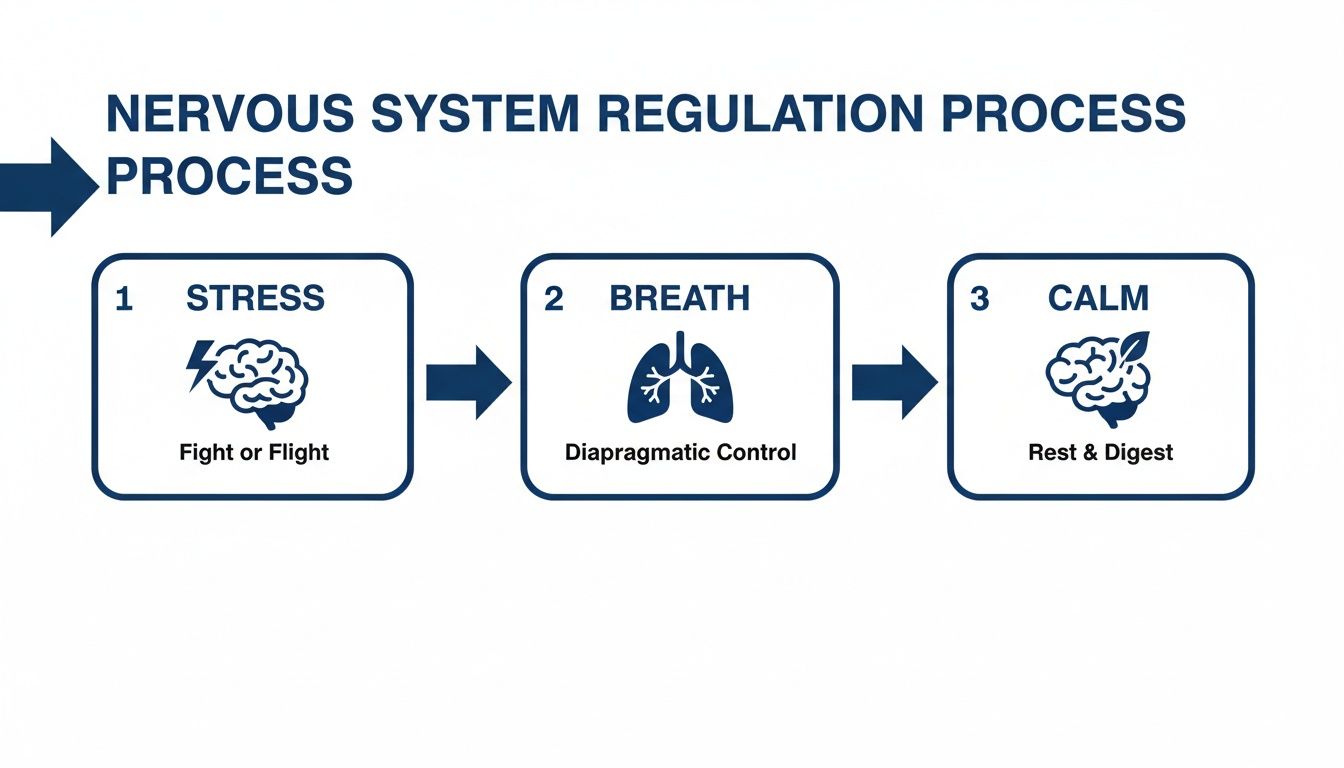
It’s a powerful reminder that you have a built-in mechanism to manage how you feel, moment to moment. By consciously working with your breath, you can shift your internal state from high alert to one of grounded peace.
Simple Breathing Techniques for Real-World Stress
You don’t need a quiet room or a yoga mat for these. These are tools for real life—for when you’re stuck in traffic, bracing for a difficult meeting, or just feeling completely swamped at your desk.
Box Breathing: The Four-Count Reset
This is a favourite of mine because its structure makes it so easy to recall when your mind is scattered. It's a go-to for everyone from athletes to emergency responders who need to stay focused under immense pressure.
Here's how it works:
- Breathe in slowly through your nose for a count of four.
- Hold your breath gently for a count of four.
- Breathe out slowly through your mouth for another four count.
- Hold again, at the end of the exhale, for a final count of four.
Just repeat this cycle for a minute or two. Try to focus on the rhythm of the count and the physical sensation of the air moving in and out. Those little pauses are important—they help your body balance its oxygen and carbon dioxide levels, which deepens the calming effect.
The 4-7-8 Method: Your Calming Exhale
Developed as a powerful relaxation practice, the 4-7-8 method puts a special emphasis on a long, slow exhale. This is what really flips the switch on your parasympathetic nervous system.
- First, breathe in quietly through your nose to a count of four.
- Then, hold your breath for a count of seven.
- Finally, breathe out completely through your mouth, making a gentle 'whoosh' sound, for a full count of eight.
That extended exhale is the magic ingredient here. It’s an unmistakable signal to your body that it’s time to stand down and relax. Honestly, just three or four rounds of this can make a world of difference.
Making Breathwork a Habit
The goal isn't to add another chore to your to-do list. It's about making these practices an automatic, natural response when stress starts to build.
A Guided Script for a Two-Minute Reset
Sit comfortably, with your feet flat on the floor. If it feels right, gently close your eyes. Just notice your breath for a moment, without trying to change it. Now, take a slow, deep breath in through your nose, letting your belly expand. Hold it for a moment. As you breathe out slowly through your mouth, imagine you’re releasing all the tension from your shoulders and your jaw. Let’s do that three more times.
Consistency really is more important than duration. A few mindful breaths scattered throughout your day do more to build those calming neural pathways than one long session once a week.
To deepen your practice, some people find a physical anchor can be incredibly helpful. For example, a mindful breathing necklace tool is designed to guide your exhalation, making it easier to find that rhythm.
These simple tools are a wonderful starting point for building a more regulated and compassionate relationship with yourself. For those interested in exploring these ideas further, particularly through the lens of Compassion Focused Therapy, the app I co-developed at https://drchrisirons.com/cft-app/ offers guided practices and resources to support your journey. By using your breath, you truly learn how to calm your nervous system from the inside out.
Grounding Techniques for When Your Mind Is Racing
While breathwork is a brilliant direct line to your nervous system, sometimes your mind is just moving too fast. The thoughts are racing, and trying to focus on your breath feels impossible.
When you're caught in that spiral of worry or full-blown panic, you need a different kind of anchor. You need something that can pull you out of the internal storm and plant you firmly back in the present moment. This is exactly what grounding techniques are designed for.
Grounding is simply the practice of using your five senses to reconnect with your immediate surroundings. It's a powerful way to interrupt the anxiety cycle. By intentionally shifting your focus to what you can see, hear, touch, smell, and taste, you’re sending a clear message to your brain: there's no immediate threat here. This helps to dial down that sympathetic "fight or flight" response.

It works because you're shifting your attention away from abstract fears about the future or regrets from the past, and onto the concrete, tangible reality of right now. It's a way of gently telling yourself, "Right here, in this very moment, I am safe." This conscious reorientation can be incredibly effective when your nervous system feels dysregulated.
The 5-4-3-2-1 Sensory Awareness Method
This is probably the most well-known grounding exercise for a reason: it's structured, easy to remember, and it works. The best part? You can do it anywhere, anytime, and no one even has to know. Think of it as a guided tour of your senses.
Here’s the simple script you can walk yourself through:
- Notice 5 things you can SEE. Look around and really notice the details. Don't just see a "desk." See the specific grain of the wood, the blue pen next to your keyboard, the tiny crack in the plaster on the wall, the way the light reflects on your screen, the dust on a picture frame.
- Acknowledge 4 things you can FEEL. Tune into the physical sensations right now. Maybe it’s the texture of your trousers against your skin, the firm support of the chair beneath you, the cool metal of your watch on your wrist, or the subtle breeze from an open window.
- Listen for 3 things you can HEAR. Just be still for a moment and listen. You might pick up on the distant hum of traffic, the ticking of a clock, or the sound of your own breathing. The goal is simply to notice the sounds without judging them.
- Identify 2 things you can SMELL. This one might take a bit more focus. Can you smell the faint scent of coffee from your mug? The soap on your hands? The pages of a book nearby? If you can’t smell anything obvious, just notice the neutral scent of the air itself.
- Name 1 thing you can TASTE. This is often the most subtle. You might notice the lingering taste of your morning tea or toothpaste. Or you can simply notice the sensation of your tongue inside your mouth.
By the time you get to the end, you'll likely find the intensity of your racing thoughts has dialled down. You've successfully shifted your brain out of its anxiety loop and into observer mode.
Other Simple Grounding Tools for Immediate Relief
The 5-4-3-2-1 method is fantastic, but it's not the only tool in the box. Sometimes what you really need is a quicker, more physical anchor. Experiment with these and see what feels right for you.
- Feel Your Feet: Whether you’re standing or sitting, press your feet firmly into the floor. Notice the sensation of the ground supporting you. Wiggle your toes. Feel that solid, stable connection to the earth. It’s a simple action that can be incredibly centring.
- Hold Something Cold: Grab an ice cube, a cold can, or just run your hands under cold water. The intense change in temperature is a powerful sensory input that can quickly snap your attention back to the present moment.
- Use Your Hands: Press your palms together firmly for about ten seconds. Notice the pressure and the warmth. Or, grip an object like a smooth stone or a textured stress ball and focus entirely on how it feels in your hand.
Real-World Scenario: Feeling Overwhelmed in the Supermarket
The bright lights, the noise, the sheer number of choices—it can quickly become overwhelming. Instead of abandoning your trolley, try this: Stop for a moment. Press both feet firmly into the floor. Listen for three distinct sounds: the beep of a checkout scanner, the squeak of a trolley wheel, and the hum of the refrigerators. This small sensory check-in can give you just enough space to breathe and continue.
Grounding isn't about ignoring or pushing away your feelings. It's about creating enough internal space so that you're not completely consumed by them. It's a foundational skill for emotional regulation and a key part of building a more compassionate relationship with your mind.
For those interested in exploring self-compassion practices further, you can find a wealth of guided exercises and information in these Compassion Focused Therapy resources I have developed. These practices help you learn how to calm your nervous system by creating an internal sense of safety and support.
Releasing Physical Tension From Your Body
A stressed mind almost always lives in a tense body. The connection is unbreakable; when you’re feeling anxious, your muscles clench in preparation for a threat—even if that threat is a looming deadline and not a sabre-toothed tiger.
Over time, this chronic tension becomes a constant feedback loop. It keeps signalling to your brain that you're still in peril, leaving your nervous system stuck on high alert.
To genuinely calm your nervous system, you have to address the physical side of this equation. This is where body-based, or somatic, practices come in. They work from the outside in, releasing stored stress from your muscles to send a powerful message of safety and relaxation back to your brain.

This approach is all about reconnecting with your body's innate wisdom. By learning to release physical tension, you create a direct pathway to mental calm. You're interrupting the stress cycle right where it lives in your tissues, helping your entire system to finally stand down.
Progressive Muscle Relaxation: Your Step-By-Step Guide
Progressive Muscle Relaxation (PMR) is a cornerstone of somatic release. It’s a beautifully simple yet profound technique where you systematically tense and then release different muscle groups throughout your body.
The real magic is in the contrast. By deliberately creating tension and then letting it go, you become acutely aware of what deep relaxation actually feels like. It’s a powerful way to re-educate your body.
Here’s how you can get started with a short PMR session:
- Find a comfortable position, either sitting or lying down. Close your eyes if that feels right for you.
- Begin with your feet and toes. Squeeze the muscles here as tightly as you can, holding the tension for about five seconds. Really focus on that feeling of tightness.
- Now, release the tension completely. Let your feet and toes go limp and floppy. Pay close attention to the wave of relaxation that follows, noticing how different it feels from the tension.
- Move up to your lower legs. Tense your calf muscles, hold for five seconds, and then release.
- Continue this process up through the rest of your body: thighs, abdomen, chest, arms, hands, shoulders, neck, and finally your face (scrunching up all your facial muscles).
Take your time with each muscle group. The whole point is to become intimately aware of what both tension and relaxation feel like in your own body.
Gentle Movements to Discharge Nervous Energy
Sometimes, your body doesn't need to relax—it needs to move.
When you feel restless, jittery, or have that 'crawling out of your skin' sensation, it’s often a sign of trapped nervous energy. Gentle, mindful movements can be a fantastic way to discharge this energy safely.
So many of us hold stress in our bodies without even realising it, which often leads to common issues like persistent aches and stiffness. Understanding the causes and relief for neck and shoulder tension is a great first step in learning how to let go of this physical burden.
Here are a couple of simple movements you can try right now:
- Mindful Neck Rolls: Gently drop your chin towards your chest and slowly roll your right ear towards your right shoulder. Pause there for a moment, then roll back to the centre and over to the left side. Avoid pushing or straining; the movement should feel gentle and exploratory.
- Shoulder Shrugs and Rolls: Inhale deeply and pull your shoulders right up towards your ears, squeezing them tight. On your exhale, let them drop completely, maybe with an audible sigh. Follow this with a few slow, deliberate shoulder rolls, first backwards and then forwards.
Therapeutic Shaking: A Quick Release
It might sound a bit strange, but shaking is one of the most natural ways for the body to release trauma and stress (just think of an animal shaking after a close call). Stand with your feet shoulder-width apart, knees slightly bent. Start by gently shaking your hands, then let the movement travel up into your arms, your shoulders, and through your whole body. Try it for just a minute or two to literally shake off the stress.
These practices aren't about achieving perfect posture or executing a flawless technique. They are about listening to your body and giving it what it needs to let go of the physical weight of stress. By doing that, you create more space for calm and ease in both your body and your mind.
Building a Nervous System-Friendly Daily Routine
While those in-the-moment techniques are fantastic for tackling acute stress, true, long-term resilience is built in the small, consistent things you do every single day. Weaving nervous system support into your daily rhythm is like sending a constant, gentle signal of safety to your body.
And please, forget the pressure of some massive lifestyle overhaul. That's not what this is about. The real key is to introduce tiny, sustainable habits that don't feel like another chore on your to-do list. It's about creating a structure that naturally supports regulation, making calm your default state rather than something you have to constantly fight for.
Crafting a Calming Morning Ritual
How you start your day so often sets the tone for everything that follows. If the first thing you do is reach for your phone, you can immediately flood your system with cortisol, plunging you into a reactive state before your feet even hit the floor.
Instead, try creating a gentle buffer between waking up and engaging with the world's demands. This doesn't mean you need to add an hour of meditation to your already busy morning. It's simply about claiming the first five minutes for yourself.
A simple morning practice could look something like this:
- Before you even think about checking your phone, take five slow, deliberate breaths. Really focus on making your exhale just a little bit longer than your inhale.
- Do a gentle stretch while your tea or coffee brews. Nothing complicated – just reach your arms overhead or gently roll your neck and shoulders to release any stiffness from the night.
- Gaze out of a window for 60 seconds. Let your eyes rest on something in the distance, like a tree or the sky. This simple act helps relax the tiny muscles around your eyes, which are notorious for holding tension.
These small actions shift your start to the day from one of reactive stress to proactive calm. They gently nudge your parasympathetic nervous system awake, creating a more regulated foundation to build upon.
Weaving Mindful Breaks into Your Day
Let's be honest, the modern workday often feels like a relentless sprint from one task to the next. Without making a point to pause, it's incredibly easy for your sympathetic nervous system to stay revved up, leading to that all-too-familiar feeling of being wired but tired by mid-afternoon.
Building in small 'micro-resets' can make a world of difference. The goal here is to periodically interrupt the accumulation of stress before it becomes overwhelming.
An intentional, screen-free break isn't a luxury; it's a vital part of nervous system maintenance. Even five minutes away from alerts and emails allows your brain to downshift and your body to release built-up tension.
Think about slotting in simple breaks like these:
- Take a real lunch break. Actually step away from your desk, put your phone away, and focus on the flavours and textures of your food for a few minutes.
- Fight the 3 PM slump with a short walk. A brisk ten-minute walk, especially if you can get outside, is brilliant for regulating blood sugar and discharging restless energy.
- Use your transition times. When you’re switching from one task to another, stand up, have a good stretch, and take three conscious breaths.
These pauses act like little reset buttons. They prevent your stress levels from continuously escalating and remind your nervous system that it's safe to come down from high alert, even in the middle of a busy day.
Designing a Restorative Evening Wind-Down
Just as how you start your day matters, how you end it is absolutely crucial for restorative sleep—a cornerstone of nervous system repair. Mindlessly scrolling through social media or watching intense news programmes right before bed can leave your mind racing and your body stuck in a state of high alert.
Creating a wind-down routine is a powerful signal to your body and mind that the day is over and it's time to prepare for rest. It helps ease that transition into the parasympathetic "rest and digest" state.
Here’s what a simple evening routine might include:
- Dimming the lights an hour or so before you plan to sleep.
- Switching from screens to an analogue activity, like reading a physical book or listening to some calm music.
- Doing a few minutes of gentle stretching or using a foam roller to release the physical tension you’ve carried all day.
- Practising a little self-compassion by reflecting on one thing you did well or one moment you genuinely enjoyed.
These rituals help to lower cortisol and promote the production of melatonin, your body's natural sleep hormone. Developing a kinder, more supportive inner dialogue is a surprisingly powerful way to soothe your entire system. For anyone interested in exploring this further, you can learn more about developing self-compassion on my website, where I share resources based on Compassion Focused Therapy.
It might feel like a lot, but seeing it laid out can make it feel much more achievable. Here’s an example of how these small actions can fit into a busy schedule.
Sample Daily Routine for Nervous System Support
This table isn't a rigid prescription, but rather a gentle guide to show how easily these small moments of regulation can be woven into an ordinary day.
| Time of Day | Activity Suggestion | Benefit for Nervous System |
|---|---|---|
| Morning (7:00 AM) | Five mindful breaths before checking phone. | Starts the day in a calm, proactive state instead of a reactive one. |
| Mid-Morning (10:30 AM) | Stand up, stretch, and get a glass of water. | Interrupts prolonged sitting and prevents stress accumulation. |
| Lunch (1:00 PM) | Eat lunch away from your desk, screen-free. | Activates the "rest and digest" system and allows for mental decompression. |
| Afternoon (3:30 PM) | Take a 10-minute walk outside if possible. | Discharges restless energy and provides a natural mood boost. |
| Evening (9:00 PM) | Dim lights and read a book instead of scrolling. | Reduces stimulating blue light and signals to the brain that it's time to wind down. |
Ultimately, it’s about finding what works for you and being consistent. Small, repeated moments of calm add up to create significant and lasting change in your nervous system's resilience.
Common Questions About Calming Your Nervous System
As you start exploring these practices, it’s completely normal for questions, and maybe even a little uncertainty, to pop up. You're learning a whole new way of relating to your body and mind, so let’s talk through some of the most common worries I hear.
Think of this process as building a kinder, more supportive relationship with yourself. It isn't about getting it perfect. The fact you have questions is a brilliant sign that you’re engaged and curious about your own wellbeing.
What if a Technique Feels Awkward or Doesn’t Work Straight Away?
This is probably the most common experience of all, and it's nothing to worry about. If you've spent years living in a state of high alert, your body might find these new, calming signals unfamiliar, even a bit strange. A breathing exercise can feel forced, and a grounding technique might seem silly at first.
The key here is gentle persistence and curiosity. Don't try to force anything. If Box Breathing just makes you feel more anxious, forget it for now and try a simple, long exhale instead. If the 5-4-3-2-1 method feels like too much, just focus on one thing, like the solid feeling of your feet on the floor.
It's a bit like learning a new language. Your first few attempts will likely feel clunky and unnatural. The goal isn’t to be fluent overnight; it’s about consistently showing up and practising, allowing your nervous system to gradually learn this new dialect of safety and calm.
Remember, the 'right' technique is simply the one that feels even 1% better or more settling for you. Give yourself permission to experiment and see it as a process of discovery.
How Long Does It Take to Notice a Real Difference?
This is a great question. While many of these techniques can offer immediate, in-the-moment relief, building lasting nervous system resilience is more of a long game. It’s less like flipping a switch and more like tending to a garden.
You might notice small but significant shifts within a few weeks of consistent practice. Perhaps you’ll catch your shoulders tensing up and consciously relax them, or you’ll find yourself automatically taking a deep breath before a stressful phone call. These are huge wins.
The deeper, more lasting changes that shift your baseline level of calm often develop over several months. The aim is always consistency over intensity. Five minutes of mindful breathing every single day will do far more for your long-term regulation than one hour-long session once a month.
When Should I Think About Getting Professional Help?
Self-help tools are incredibly powerful, but they aren’t a substitute for professional support, especially when stress or trauma is chronic or deeply rooted. Recognising when you might need more specialised guidance is a real sign of self-awareness and strength.
You might want to consider seeking support from a therapist or psychologist if:
- Your symptoms of anxiety, stress, or shutdown are getting in the way of your daily life, work, or relationships.
- You have persistent feelings of hopelessness or feel completely overwhelmed most of the time.
- You find that the techniques you try consistently seem to make you feel worse or trigger intense emotional responses.
- You have a history of trauma that feels too big or scary to approach on your own.
Reaching out for help is a proactive and compassionate step toward healing. A trained professional can offer a safe, supportive space and provide targeted therapies to help you regulate your nervous system on a much deeper level.
Navigating your inner world takes courage and compassion. At Dr Chris Irons, I specialise in helping people understand and work with their nervous systems using the evidence-based approach of Compassion Focused Therapy. If you feel you could benefit from some one-to-one guidance, you can explore my therapy and coaching services at https://drchrisirons.com.